
Italian bibliography of Alfred Tomatis
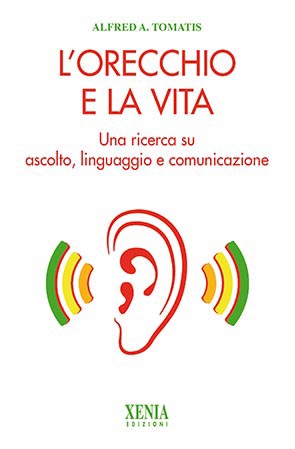
L’Orecchio e la Vita, Prefazione di Concetto Campo, Xenia 2017. The autobiography of Alfred Tomatis, a scientist of singular talent. It is the story of his discoveries and of the continual challenges he had to face in the course of his activity as a researcher. It is the fascinating journey into the mind of a scientist and the account of how the Tomatis method, just as its inventor handed it down to us, was built up over the course of several decades. Anyone interested in music, in sound and in health should read this book.
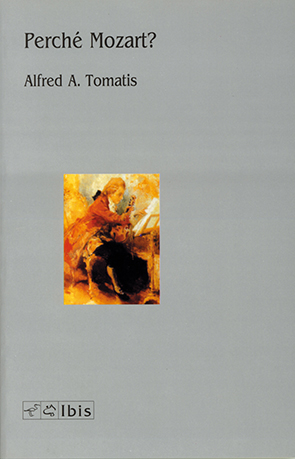
Perché Mozart, Ibis, 1996, Xenia 2020. Many decades before the recent confirmations coming from American research, Tomatis had discovered the unequalled therapeutic qualities of the music of the great Amadeus. Why is Mozart’s music different from all the others? Why is he the only musician whom all the peoples of the world receive spontaneously? Why is his the only music that, through the electronic ear, manages to give the same neuropsychological responses in all parts of the world? So: why Mozart? The author explains it in 150 pages.
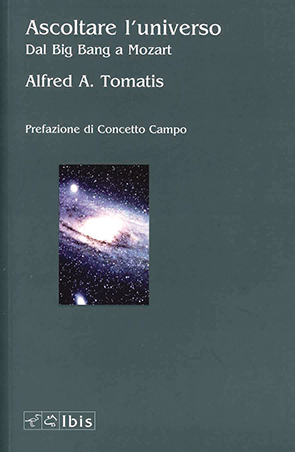
Ascoltare l’Universo, Prefazione di Concetto Campo, Ibis 2013, Xenia 2020. The summa of Tomatis’s scientific, psychological, anthropological and spiritual research. The hypothesis-metaphor of the sound that induces the creation of the universe. A journey into the universe starting from sound, which takes us from physiology and acoustics to the harmony of music and of song, from therapy with sounds to the study of the word and of language. At the end of the volume, an anthropology of listening among the ancient Greeks, the Hebrews and the ancient Asian cultures.
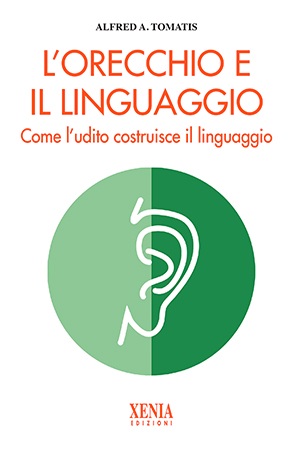
L’Orecchio e il Linguaggio, Ibis, 1995 - Xenia, 2019. Language, as a founding element of man’s humanity, cannot be analysed and studied without bearing in mind the decisive role played by hearing: it is, indeed, thanks to it that it was possible for man to construct language. In this volume Tomatis proposes a comprehensive interpretation of man, placing the accent upon the importance that the body, in its integrality, assumes in phonation. One of the most complete essays for understanding Tomatis’s theory of listening.

Siamo tutti nati poliglotti, Prefazione di Concetto Campo, Ibis, 2003 - Xenia, 2017. Why do Italians and French have considerable difficulties in learning to speak a foreign language, while the Slavs seem to be born with the gift of languages? The latter use in their language almost all the frequencies of the audible range, 10 octaves and sometimes more, while Italians and French use little more than one octave. A fascinating journey into the marvellous world of the acoustics of languages and of their influence upon the modelling of cultures, of behaviours and of ethnic motricities.
Le Difficoltà Scolastiche, Prefazione di Concetto Campo. Ibis, 2011. The linguistic and learning difficulties that the child and the adolescent with listening problems risk encountering during their journey towards the comprehension of the world. Less technical than Educazione e Dislessia, but more subtle in the description of the objective situations and of the states of mind of the child in difficulty with school.
Vertigini, Prefazione di Concetto Campo. Ibis, 2009. It is the book where Tomatis touches upon the difficult subject of Ménière’s vertigo, presenting his point of view on the matter, drawn from clinical evidence and from the results he obtained in treating, with the education of listening, what is in his view a great psychosomatic illness.

Nove Mesi in Paradiso. Storie della vita prenatale, Prefazione di Concetto Campo. Ibis, 2007. The psychological and emotional experience of the foetus, starting from Tomatis’s studies on intrauterine acoustics. The author explains how the voice of the mother – captured in the depths of the uterine night – influences the development of the newborn and determines his future well-being. The application of the method in relaxation in pregnancy and in preparation for birth, carried out in the maternity ward of the Vesoul hospital, in France, with surprising results.
Come nasce e si sviluppa l’Ascolto Umano, Red, 2001. Psychology and neurophysiology of a vital function. This is the most important theoretical text for understanding the complex psychophysiological theory underlying the method of re-education of listening perfected by Tomatis. The book is organised in two distinct parts: in the first the author expounds the psychological aspect of listening and its phylogenesis (that is, how it is born and develops in the course of the evolution of man); in the second he proposes a physiological theory revolutionary with respect to the habitual concepts linked to the functioning of the auditory apparatus.

La Notte Uterina, Prefazione di Concetto Campo. Red, 1996-2009. Basing himself upon the research of physiology and of neurology, the author shows with what haste the foetus develops the ear so as to be able to listen (and thus to grow, to evolve, to communicate with the external world): already from the fourth month it is able to do so; from that moment it will always strain its ear towards us. La Notte Uterina is an astonishing journey into the sonic universe that precedes birth.
Dalla Comunicazione Intrauterina al Linguaggio Umano. La liberazione di Edipo, Ibis, 1993. Tomatis proposes a new interpretation of the origin of language and deepens the mother-child relationship before and after birth. In the light of these analyses, it becomes possible to develop a different reading of human relationships and of the very evolution of man. Tomatis has the capacity to connect, with rigour and simplicity, medicine to philosophy, to psychology, to linguistics, placing at the centre of this essay a new and fascinating interpretation of the tragedy of Oedipus.
L’Orecchio e la Voce, Baldini e Castoldi, 1993. The book where Dr Tomatis shows, with particular observational and descriptive acumen, how our body behaves when we sing to the best of our possibilities. Not a manual of singing technique, but a guide for those who have been led astray, in their own path, by techniques little respectful of the phonatory apparatus and of the psychology of the pupil.
Management dell’Ascolto, Franco Angeli Editore, 1992. In collaboration with Walter Passerini of the Corriere della Sera. This book is born of the collaboration of a scientist and physician, a specialist in listening, and a journalist, an expert in economics and corporate communication. The result is a volume dense with information and meanings for those who, lovers of effective communication, wish to grasp and put into practice the meaning of the term “human listening”, in all its nuances.

Educazione e Dislessia, Edizioni Omega, 1977. This is the first book of Tomatis published in Italian. Here the author illustrates his theory on dyslexia and the problems connected with it, such as dysgraphia, dysorthography, dyscalculia, and their relationships with problems of listening and of behaviour. At the end of the volume some cases of dyslexia improved with the method of re-education of listening perfected by Alfred Tomatis are presented.
Books and writings in italian on the Tomatis method
Giovanni Ansaldi, La Lingua degli Angeli. Introduzione all'Ascolto della Musica, Guerini e Associati, 1993
Concetto Campo, L’Orecchio e i Suoni Fonti di Energia, Riza Scienze, Nov. 1993
Don Campbell, L’Effetto Mozart, Baldini e Castoldi, 1999
Concetto Campo, La Geografia Acustica di Alfred Tomatis, in Quaderni Ismez: Ricerche e Studi, Ismez Editore, 2002
Concetto Campo, Introduzione al Metodo Tomatis, Università degli Studi di Ferrara, 2002
Concetto Campo, Il Metodo Tomatis, Riza Scienze, Nov. 2007
Concetto Campo, I Suoni che danno Energia, Riza Scienze, Giugno 2011
Concetto Campo, Il metodo Tomatis per cantanti, in La Voce del Cantante. Edited by Franco Fussi. Vol III, Omega Edizioni, 2012
Concetto Campo, L'Orecchio e le Lingue Straniere. L'approccio Tomatis all'integrazione delle lingue, in Crossroads. Languages in (E)Motions. Atti del Convegno, Napoli "L'Orientale" University Press, 2014
Norman Doidge, Le Guarigioni del Cervello, Ponte alle Grazie, 2015
Walter Coppola, Itinerari sonori, Mimesis, 2015
Paul Madaule, Quando l'ascolto prende vita, Streetlib, 2016
Concetto Campo, La lingua modifica non solo la struttura mentale ma anche quella fisica, in PerSona, Voce e Identità. Atti del Convegno, Università degli Studi di Padova Editrice, 2016
Concetto Campo, Orecchio, linguaggio e postura, in Approccio multidisciplinare alla posturologia, edited by Pietro Bressan and Enrico Mantovani, Edizioni Martina, Bologna 2019
Giada Malacarne, Dialettica dell'ascolto, Percorsi di filosofia della musica tra Adorno e Tomatis, Self Publishing, 2019
Concetto Campo, Il metodo Audiopsicofonologico di Alfred Tomatis, in Il grande libro di medicina e psicologia energetico vibrazionale, vol. 2, edited by Alfonso Guizzardi, Edizioni Sì, Villalago (AQ), 2019
Alessandro Pillinini, Il potere dell'ascolto, Indipendently Published, 2020
Concetto Campo, Il metodo Tomatis. Il ruolo centrale dell'orecchio nella vita, Edizioni Xenia, Como-Pavia, 2020
Carlos Alós , Audiologia e psicologia, Indipendently Published, 2021
Giada Malacarne, Un dono che ti cambia la vita, Come sfruttare le proprietà neuroplastiche del cervello attraverso la stimolazione dell'orecchio nei più comuni disturbi dell'età evolutiva, Vergerio Editore, 2023
With the publication of the volume "Le Difficoltà Scolastiche", all the books of Alfred Tomatis have been translated and published in Italian, and Italy is the first country in the world to have translated the entire literary work of the French doctor.
The books published in Italian are easily found in bookshops and on online book-selling sites. Some of them may be momentarily out of print and awaiting reprinting.
There also exist, in French and in other languages, many scientific articles, degree theses, doctoral dissertations, popular articles, and texts of conferences and lessons given by Tomatis at universities, schools, music conservatories and on the occasion of international congresses, which give an even deeper idea of the scientific and cultural depth of the work and of the life of the scientist.
Some of them are downloadable in the section Scientific articles, texts of conferences, lessons and more.
In the bibliography indicated below are found the original books of Tomatis and all his writings, scientific and popular.
For any information or request, you may contact our studio.
Books on the Tomatis method in other languages
T. M. Gilmor, P. Madaule, B. Thompson,About the Tomatis method,Listening Centre, 1989
Cori Lopez Xamarr, Mi billete en el tren de Tomatis, La Campana Editorial, 1990
Paul Madaule, When listening comes alive, Moulin Publishing, 1994
Simone Wehmeyer, Die Tomatis-Methode und ihre Bedeutung für die Pädagogik, Grin, 2005
Pierre Sollier, Listening for wellness. An introduction to Tomatis method, The Mozart Center Press, 2005
Patrick Dumas de la Roque, L'écoute, c'est la vie. Introduction à la Méthode Tomatis, Jouvence Editions, 2007
Monika Warner, Die Mutterstimme: Herzstück der erfolgreichen Horchtherapie nach Dr. Tomatis, Taschenbuch, 2011
Juan Antonio Timor Pineda, Tomatis, una experencia para compartir: aproximación a la Audio-Psico-Fonología, Sibirana Ediciones, Zaragoza, 2015
French bibliography of Alfred Tomatis up to 1992
1 La surdité professionnelle
(Congrès de la Société Française d'Oto-Rhino-Laryngologie, Paris) MM. Maduro, Lallement et Tomatis.
Librairie Arnette [ 1952]).
2 Incidences observées dans les lésions auriculaires constatées chez le Personnel des bancs
D’essai et les professionnels de la voix
Bulletin du Centre d'Études et de Recherches médicales de la SFECMAS (Nord Aviation) (septembre 1952).
3 L'oreille musicale
Journal Français ORL, 2, n° 2, pp. 99-106. Imprimerie Gauthier (1953).
4 Le bégaiement, Essais de recherches sur sa pathogénie
Bulletin du Centre d’Études et de Recherches médicales de la SFECMAS (juin 1953).
5 L'oreille directrice
Bulletin du Centre d'Études et de Recherches médicales de la SFECMAS (juillet 1953).
6 La voix chantée
7 L'audiométrie dynamique
Bulletin du Centre d'Études et de Recherches médicales de la SFECMAS (septembre 1953).
8 L'audiométrie d'usine
Bulletin du Centre d'Études et de Recherches médicales de la SFECMAS (octobre 1953).
9 Correction de la voix chantée
Cours International de Phonologie et de Phoniatrie (Faculté de Médecine de Paris). Librairie Maloine,
- 335 à 353 (1953).
10 Rôle directeur de l'oreille dans le déterminisme des qualités de la Voix normale (Parlée ou
Chantée) Et dans la genèse de ses troubles
Actualités Oto-Rhino-Laryngologiques.
11 Recherches sur la pathologie du bégaiement
Journal Français Oto-Rhino-Laryngologie, 3, n° 4, pp. 284 sq. (avril 1954).
12 Pour information sur la surdité professionnelle
Bulletin du Centre d'Études et de Recherches médicales de la SFECMAS (juillet 1954).
13 La sélectivité auditive
Bulletin du Centre d'Études et de Recherches médicales de la SFECMAS (octobre 1954).
14 La surdité professionnelle À la soufflerie de vernon
Rapport des journées des médecins de la DEFA (16-1718 mai 1955) pp. 11-14. Direction des Études et Fabrications d'Armement (mai 1955).
15 La surdité À la DEFA
Le Médecin d’Usine, n° 8, pp. 401 à 404 (septembre-octobre 1955).
16 La surdité professionnelle
Revue « Travail social », n° 2, pp. 39-42. Revue de la Fédération Française des Travailleurs Sociaux (1956).
17 Relations entre l'audition et la phonation Annales des Télécommunications, tome II, n° 7-8. Cahiers d'Acoustique (juillet-août 1956).
18 Audiométrie objective : Résultats des contreréactions phonation- Audition
Journal Français d'Oto-Rhino-Laryngologie, n° 3, pp.379 à 391. Imprimerie M. Gauthier, Lyon (mai-juin 1957).
19 Les nuisances du bruit
Revue « Le Médecin d’Usine », n° 9.
Revue pratique de Médecine et Hygiène du Travail, pp. 605 à 624 (novembre 1957).
20 La rééducation automatique
École polytechnique de l'université de Lausanne (septembre 1958).
Annales du GALF (Groupement des Acousticiens de Langue Française).
21 L'audiométrie de dépistage en usine Bulletin de la Société d'Hygiène et de Médecine du Travail de
Normandie (Le Havre) (mai 1958).
22 Psychophysiologie des troubles du timbre et du rythme dans le Langage Cours professé à la
Faculté des Sciences, dans un cycle de conférences sur les « Problèmes de Psychophysiologie acoustique »,
sous la direction du docteur Busnel, à la chaire de Psychophysiologie de la Sorbonne (février 1959).
23 Les réactions somatiques et psychiques au bruit industriel
Archives des Maladies Professionnelles, t. 20, n° 5, pp. 611624. Communication faite au cours du V Congrès
International de Médecine du Travail (10 octobre 1958), Lyon.
Revue de la Médecine Aéronautique, tome XIV, n°s 2 et 3 (2e-3e trimestre 1959).
24 Audiologie et phonologie expérimentales et appliquées
Cours à l'École des Psychologues Praticiens (1959).
25 L'électronique au service des langues vivantes
Conférence donnée à I’unesco le 11 mars 1960.
Parue dans le bulletin de l'Union des Associations des Anciens Élèves des Lycées et Collèges Français
(mars 1960).
26 Conditionnement audio-Vocal Bulletin de l'Académie Nationale de Médecine, tome 144, n° 11 et 12.
Communication présentée par M. Moulonguet (mars 1960).
27 La voix chantée, Sa physiologie, Sa pathologie, Sa rééducation
Cours à l’hôpital Bichat (mars 1960). Cours d'orthophonie et de rééducation de la parole.
28 La résonance dans les échelles musicales, Le point de.Vue du Physiologiste
Annales de l'Institut de Musicologie (sous la direction de M.J. Chailley). Conférence prononcée au 9 mai
1960 au cours du Colloque International sur la « Résonance dans les Échelles Musicales » à
l’amphithéâtre de l’Institut d'Art et d'Archéologie, Paris.
29 Relations audio-Phonation
Revue « Promouvoir », n° 1, pp. 7-10 (septembre 1960).
30 La voix
L'oreille et la vie
« Revue Musicale », édition spéciale consacrée à « Médecine et Musique » (1962).
31 L'oreille et le langage
Éditions du Seuil (1963). Collection Microcosme.
Le Rayon de la Science n° 7, 192 pages, illustr.
32 L'orl devant les problèmes du langage
« L'hôpital », n° 747 b/s (1964).
33 La surdité
Conférence faite à la demande de la Caisse d'Allocations Familiales de Paris, le 17 novembre 1965
(Éditions Soditap).
34 L'oreille directrice
(1966) Éditions Soditap.
35 La dyslexie
Cours à l’École d'Anthropologie (1967). Éditions Soditap.
36 Le langage, Examen clinique, Pathologie, Traitement
Société de Médecine de Paris.
Revue d'Enseignement Post-Universitaire (1970).
37 L'intégration des langues vivantes (1970) Éditions Soditap.
38 Éducation et dyslexie
Éditions ESF, Paris (1971):
Collection « Sciences de l’Education », 201 pages.
39 De la communication intra-Utérine au langage humain
Éditions ESF, Paris (1972).
Collection « Sciences de l’Éducation », 180 pages.
40 La musique et l’enfant
Communication faite au I Symposium Régional de la Musique, à Pierrelatte, 11-14 mai 1972.
41 L’interprétation du test d'écoute Rapport au III Congrès International d'Audio-Psycho-Phonologie, Anvers, 1973.
42 Vers l'écoute humaine
Tome I : « Qu'est-ce que l'Écoute humaine? » Éditions ESF, Paris (1974);
Collection « Sciences de l’Éducation », 171 pages, illustr.
43 Vers l'écoute humaine
Tome II : « Qu'est-ce que l'Oreille humaine ? » Éditions ESF, Paris (1974).
Collection « Sciences de l'Éducation », 171 pages, illustr.
44 La rééducation de la voix, Les différentes méthodes de traitement
La Vie Médicale, n° 20, mai 1974/4.
45 Les bases neurophysiologiques de la musicothérapie
Bulletin de l’ISME (International Society for Musical Education).
Exposé fait aux Journées d’informations sur les techniques psychomusicales.
Conservatoire de Grenoble, 1-3 avril 1974.
46 Le rôle de l'oreille dans la musicothérapie
Rapport au Congrès International de Musicothérapie, Paris 31 octobre-3 novembre 1974.
47 L'oreille considérée comme capteur
Les Cahiers de la Méthode Naturelle en Médecine, septembre 1974.
48 La musicothérapie et les dépressions nerveuses
Rapport au IV Congrès International d'Audio-Psycho-Phonologie, Madrid, 1974.
49 VOIX, Audition et personnalité
Revue « SOS Amitié », France, n° 48, septembre 1974.
50 Considérations sur le test d’écoute Juin 1974.
51 Le dépistage de l’enfant dyslexique À l'école maternelle
Conférence faite à l'université de Potchefstroom au cours du Congrès national de la South African Society for
Education, 21 janvier 1976.
52 L'arbitraire dans le langage
Conférence faite au cours du II Congrès national de l'Association Française d'Audio-Psycho-Phonologie.
Université de Paris, mai 1976.
53 L'univers auditif
Conférence faite au Centre du Langage de Fribourg (Suisse), mars 1977.
54 L'écoute intra-Utérine
Conférence faite au cours du me Congrès national de l'Association Française d'Audio-Psycho-Phonologie,
Carcassonne, juillet 1977.
55 Incidences psychophysiologiques du chant Conférence faite au cours du III Congrès International
de l’Institut Kodaly. Université d'Acadia-Wolfville (Canada), août 1977.
56 Les aspects médico-Psycho-Pédagogiques de l'audio-Psycho- Phonologie
Congrès International de Montréal, Canada, mai 1978.
57 La musique et ses effets neuro-Psychophysiologiques
XIII Congrès de l’ISME (International Society for Musical Education), London, Canada, août 1978.
58 Inconscient et conscience
Centre Tomatis, 1979.
59 Les pouvoirs du musicien
« Revue Musicale »: « La face cachée de la Musique Française contemporaine », n° 316-317, mars 1979.
60 L'oreille et l'enfant
Université d'Ottawa, « Festival de l'Enfant », mars 1979.
61 Oreille et difficultés d'apprentissage
Congrès de I'aqeta, Montréal, mars 1979.
62 La musique, Notion indispensable et pourtant supposée superflue
Extrait de la revue « Diapason », 1980.
63 Le défi de l'audio-Psycho-Phonologie Symposium d'Audio-Psycho-Phonologie, Université de
Potchefstroom, avril 1980.
64 L'oreille et le chant
Conservatoire de Musique de Berne, Suisse, août 1980.
65 La nuit utérine
Éditions Stock, Paris, 1981, 256 pages.
66 Le chant et la musique. Leur importance dans le développement de la personne.
Congrès Kodaly, Aylmer, Canada, octobre 1982.
67 La vie psychique et sensorielle du foetus
Traduction de « La vita psichica e sensoriale dal feto » paru dans l’« Enciclopedia della Scienza e della
Tecnica », 7° édition, Milan, 1984.
68 La phénoménologie de l’écoute
Publication du Centre Tomatis, Paris, 1984.
69 L'oreille et la voix
Éditions Laffont, 1987.
70 Apprendre une langue étrangère avec une nouvelle oreille
Northeast Conference Washington D.C., U.S.A., avril 1986.
71 Pourquoi le grégorien
Article publié par la revue Cantate Domino, juillet-octobre 1987.
72 À l'écoute de la vie, Devenir et avenir Entretiens de Monaco, Les enfants de l'avenir, mars 1987.
73 La genèse de l'écoute
Centre Tomatis, Paris, juin 1987.
74 Le SON dans la relation mère-PÈRE-Enfants
Congrès Sages-femmes du monde, Paris, octobre 1988.
75 À l'écoute de la parole
Centre Tomatis, Paris, 1989.
76 Les troubles scolaires
Éditions Ergo Press, 1989.
77 Vertiges
78 Neuf mois au paradis
79 Écoute-VOIX-Espace
Table ronde internationale, Cahiers du CNRS -- Série « le corps en jeu », mars 1990.
80 L'oreille et le langage À l'école maternelle
Soixante-troisième Congrès de I'agiem (Association générale des institutrices d'écoles maternelles), Chambéry, juin 1990.
81 La voix-L'oreille
« La Voix Dévoilée », actualités scientifiques de la voix chantée, Éditions Romillat, 1990.
82 SON et énergie
Congrès international AIEV, Le corps énergétique de l’homme, Paris, 1990.
83 La méthode Tomatis
Interviews du Dr A.A. Tomatis par Mme Hélène Maguet, 1991.
84 L’écoute de la communication en entreprise
Forum de la communication, Milan, novembre 1991.
85 Équilibre et yoga. Role de l'oreille interne.
Revue française de yoga, 1991.
86 Nous sommes tous nés polyglottes
Éditions Fixot, 1991.
87 Pourquoi Mozart ?
88 Sortie des eaux : Développement de l'oreille humaine.
Exposition au Muséum d'histoire naturelle, Paris, 1991.
89 Mozart. Une Mozarthérapie peut-Elle être envisagée ?
Conférence préparée pour les entretiens de Monaco, 1992.